
Existing Between Two Worlds

There’s a strange feeling I’ve been carrying the past few days here in northern Spain. A feeling of existing in two completely different worlds at the same time.
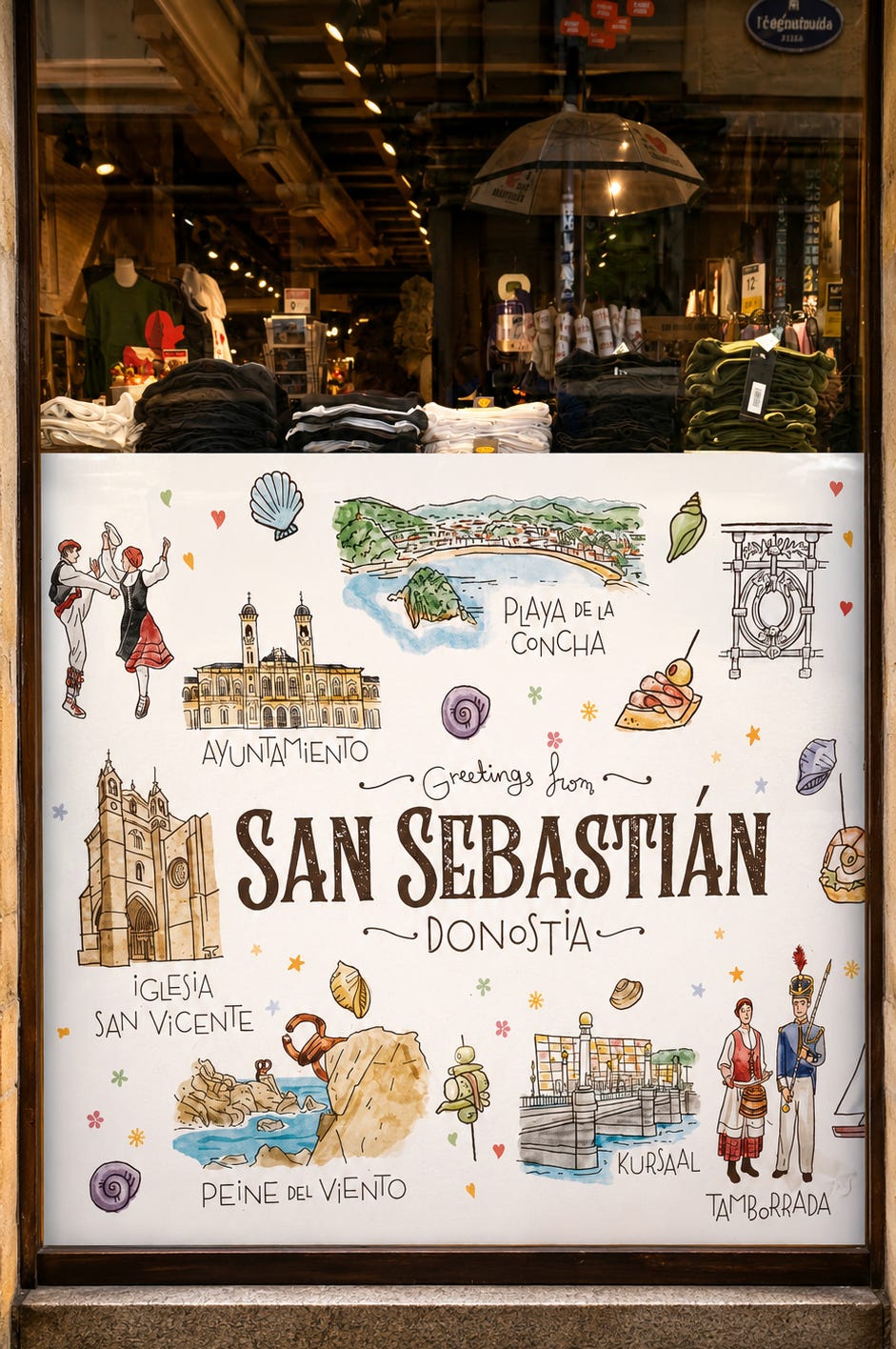
One world is filled with slow dinners that stretch late into the evening. Tiny streets overflowing with life. Glasses of wine clinking under warm lights. Pintxos lined across crowded bars in San Sebastián like little pieces of art. Conversations. Laughter. Thousands of years of history layered into every building, every stone street, every tradition that still somehow survives in a modern world moving faster than ever.
And then there’s the other world.
The one I can’t stop thinking about every single day since leaving the mountains.
The world of the Cantabrian brown bear. Mist rolling across endless peaks. Silence broken only by cowbells and distant birdsong. Watching through a spotting scope as one of the rarest bears on Earth slowly emerges from the mountainside. A mother and two cubs feeding quietly in the mountains. A solitary male disappearing into the forest. A place where wildness still feels ancient and deeply alive.
What’s been striking me most is how close these two worlds actually are.
Just hours apart.
One of Europe’s greatest culinary and cultural cities exists alongside one of the continent’s rarest large carnivores. Human civilization at its finest existing beside a species we nearly erased forever.
And honestly, I can’t stop thinking about what that says about us.
As humans, we have an incredible ability to create beauty. Cities like San Sebastián are proof of that. The food, the architecture, the art, the stories, the culture passed down through generations. We are capable of extraordinary things. We create music, paintings, books, conservation movements, communities, and moments of connection that make life feel meaningful.
But we are also capable of destroying almost everything around us.
The Cantabrian brown bear once stood on the brink of extinction. Hunted. Poisoned. Fragmented into isolated populations. At one point, there were believed to be barely more than 100 bears left in these mountains. An animal that had lived here since long before modern Spain even existed nearly disappeared within the span of a few human generations.
And yet somehow, against the odds, they survived.
Not because nature simply healed itself, but because people decided they mattered.
That’s the part I keep thinking about while sitting in busy restaurants here or walking through streets filled with people from all over the world. Humanity’s relationship with this planet is not simple. We are not purely destructive, and we are not purely good. We are both. We are capable of wiping species from the Earth, and we are capable of bringing them back. Sometimes within the exact same lifetime.
Maybe that’s why places like northern Spain affect me so deeply.
They feel like a glimpse into what coexistence could actually look like.
Not a world without people. Not some fantasy untouched wilderness. But a world where humans still live rich, meaningful lives while leaving space for wildness to survive beside us. Where bears can still roam the mountains while cities continue to thrive below them.
The older I get, the more I realize this tension may define the future of conservation itself.
Because the reality is that there are more people on this planet than ever before. More roads. More development. More pressure on wildlife. The wild places I love most are becoming smaller and more fragmented every year. And yet, at the same time, there are still stories of hope unfolding across the world if we choose to pay attention to them.
The Cantabrian brown bear is one of those stories.
And maybe that’s why I already miss them so much.
Not just because they are beautiful animals, although they are. Not just because seeing one standing on a misty Spanish mountainside feels almost surreal. But because they represent something larger. A reminder that wildness can still endure. That coexistence is still possible. That the future of this planet is not fully written yet.
As I sit here eating some of the best food I’ve ever had, surrounded by history and culture and human creativity, part of my mind is still back in those mountains searching the hillsides for bears.
Honestly, I think a part of me always will be.
Quote of the Week
The Earth is what we all have in common.”
— Wendell Berry
Tour Updates: Northern Spain Is Happening 🇪🇸🐻
As I hinted in the last newsletter, my time here in Northern Spain has completely blown me away. The bears, including my best sighting at the very last moment of the very last day, the food, the culture, the scenery, the wild cats, the wolves, and the feeling that true wildness still survives here. This experience exceeded every expectation I had.
I’m already planning to return at the end of May / early June next year with a very small group of just 3 people. If this is something that speaks to you, please continue to let me know of your interest.
2026 Tours with Availability
Sept 2-9: Kenya Big Cat Safari (2 spots)
Sept 13-21: Brazil Jaguars (2 spots)
*NEW Nov 24-30: Mountain Gorillas (3 spots)
*NEW Nov 30 - Dec 5: Mountain Gorillas (3 spots)
Feel free to reply to this email with any questions, feedback, or just to share your latest wildlife photos. Feel free to share this message with fellow nature lovers, too—let’s grow this community together!
Thank you for being a part of The Wildlife Collective community. Stay tuned for more updates, conservation news, and incredible wildlife encounters!
Best regards,
Zac Mills
The Wildlife Collective
❤️🇪🇸🐻❤️